Tesu Justice Mawuko
10310016
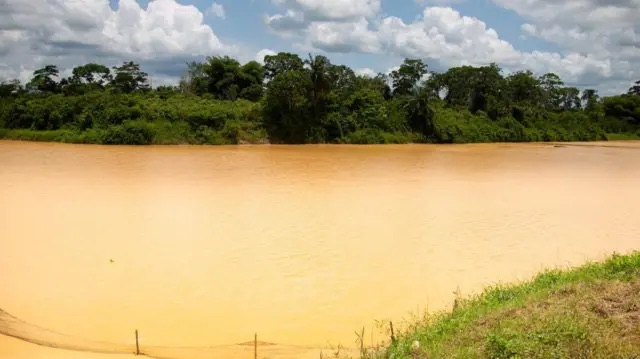
In the quiet town of Jema, once‑pristine rivers have turned murky and unsafe. The Birim River, a lifeline for many villagers, now runs brown with silt and chemicals. Ama ankrah ,a resident, recalls bathing in and drinking from the river as a child. Today, she keeps her grandchildren away, fearing contamination. “We can no longer trust the water,” she says, shaking her head.
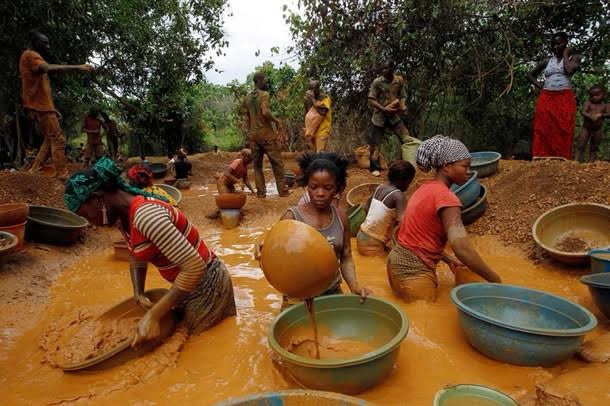
Ama’s experience reflects a broader crisis: the scourge of “galamsey,” Ghana’s illegal small-scale gold mining. Rivers across the country including the Pra, Ankobra, Offin, and Birim are increasingly polluted. Mercury and cyanide, commonly used in these operations, seep into the water and soil, threatening both human health and agricultural livelihoods.
Destruction of Land and Loss of Livelihoods
Communities in Obuasi, Anyinam, and Sanso illustrate the environmental devastation. Open-pit mines gouge the land, leaving behind massive craters and infertile soil. Cocoa farms, a key source of income for many families, are being destroyed at alarming rates. Some estimates indicate that illegal mining has affected over 19,000 hectares of cocoa farmland, hitting farmers’ incomes and the national economy alike.
Farmers in affected areas report that fertile plots have been reduced to rocky, contaminated terrain, making planting nearly impossible. The widespread deforestation and degradation not only destroy crops but also reduce biodiversity and destabilize local ecosystems.
Health Hazards for Local Communities
The human cost of galamsey is equally severe. Villagers living near mining sites are increasingly exposed to mercury poisoning, skin ailments, respiratory issues, and other chronic health problems. Contaminated water and crops have also introduced toxins into local diets, posing long-term health risks. The Environmental Protection Agency has repeatedly raised alarms about the dangers posed by unregulated mining to both human and ecological health.
Economic Impact: Short-Term Gains, Long-Term Losses
For many local residents, illegal mining offers a quick source of income. Up to one million Ghanaians are reportedly engaged in small-scale mining, though only a fraction operate legally. While miners may earn money temporarily, the broader economic consequences are dire.
Illegal mining reduces tax revenue for the state and increases the cost of environmental clean-up. The Ghana Water Company has, in some cases, been forced to shut down water pumping stations because contamination makes water treatment prohibitively expensive. The cumulative effect is significant: damaged farmland, compromised food security, and lost national revenue.
Voices From the Ground
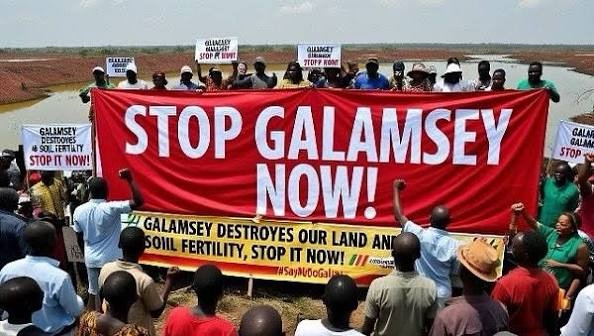
In mining-affected communities such as Akyem Mampong and Atiwa East, elders and farmers express frustration over the lack of inclusion in legal mining processes. Community leaders like Nana Ansah Sasraku Ofram II emphasize that locals are powerless while outsiders exploit their land. Some miners, aware of the environmental damage, call for formalization and regulation to prevent further destruction.
Residents in Jema have begun forming community patrols to monitor illegal sites, report violations, and advocate for sustainable mining practices. Their efforts highlight the potential for local solutions to complement government interventions.
Toward Sustainable Solutions
Addressing the crisis requires coordinated strategies that balance livelihoods with environmental protection:
1. Formalization of Artisanal Mining: Registering and training small-scale miners can ensure safer, environmentally friendly practices while generating tax revenue.
2. Rehabilitation of Damaged Sites: Governments and NGOs can lead reclamation projects to restore contaminated rivers, reforest degraded land, and rehabilitate farmland.
3. Technology-Driven Monitoring: Deploying drones, satellite imagery, and sensors can help authorities detect illegal mining activity in real time and respond promptly.
4. Alternative Livelihoods: Investing in sustainable agriculture, eco-tourism, and other non-mining opportunities can reduce community dependence on illegal mining for income.
Conclusion
Ghana’s gold wealth is accompanied by a heavy human and ecological cost. Poisoned rivers, decimated farmland, and communities struggling to survive reveal the dark side of illegal mining. While immediate enforcement actions are necessary, long-term solutions lie in regulation, community empowerment, and sustainable development. With careful planning and committed action, Ghana can preserve both its natural environment and the well-being of its citizens while still benefiting from its mineral wealth.
 Justice Scripts
Leave a comment